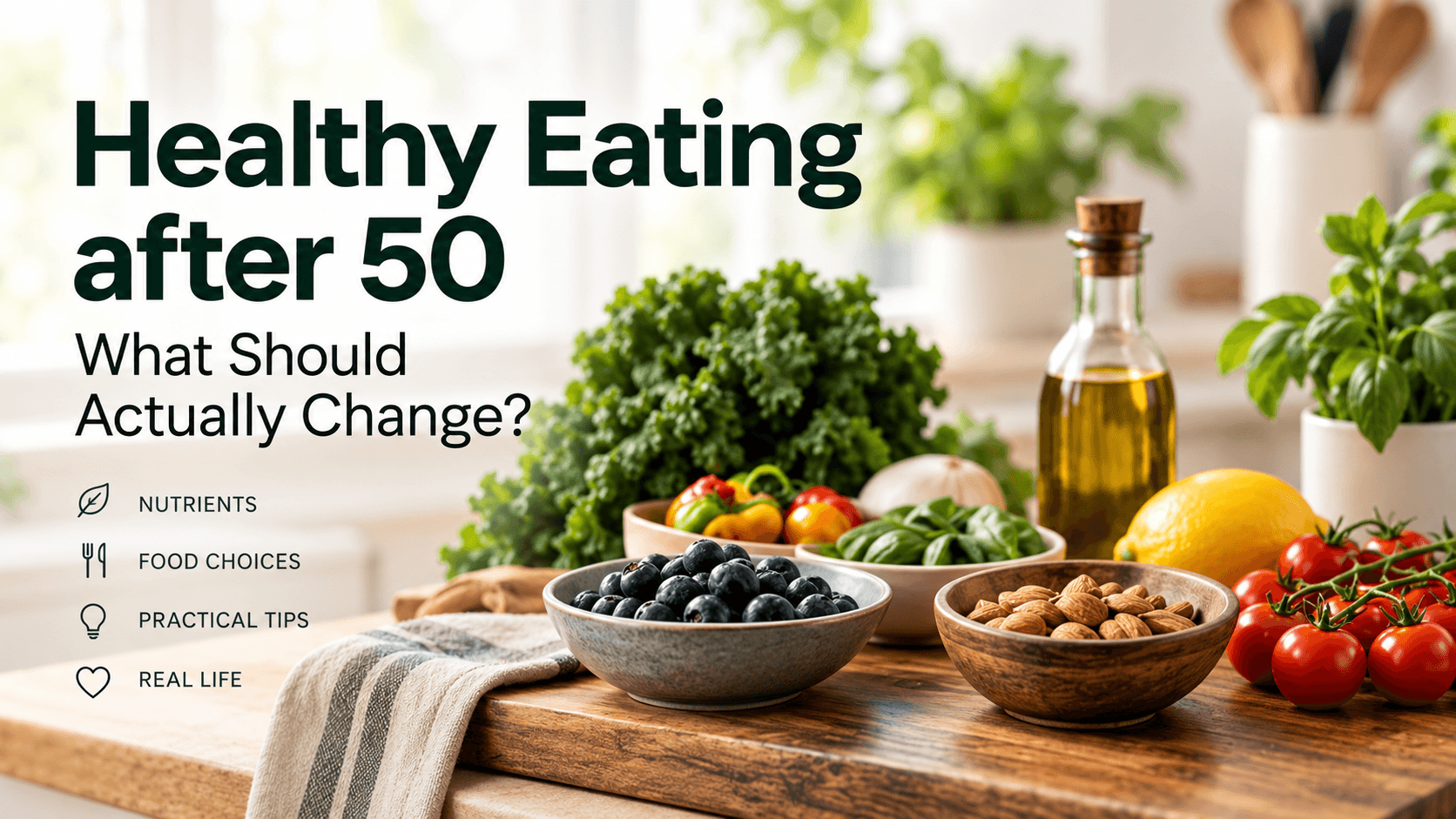
Does your diet need to change after 50? Explore protein foods, calcium, vitamin B12, appetite, and practical ways to support healthy aging.
Your diet does not need a complete redesign on your 50th birthday. Healthy eating as you age still involves a variety of foods that provide the energy and nutrients you need. However, some nutrient recommendations and practical eating challenges do change with age.
The goal is to notice those changes without assuming that everyone in the same decade needs the same diet.
Do you need a special diet for your 40s or 60s?
Research describing age-related biological changes does not automatically provide a diet prescription.
For example, a 2024 study identified substantial molecular changes around the mid-40s and around 60 in the participants studied. It did not test whether everyone should adopt a particular diet at those ages.
A birthday can serve as a reminder to review your habits. It cannot replace an assessment of your health, activity, medications, and food intake.
After 50, review calcium
Calcium recommendations vary by age and sex. According to the US National Institutes of Health, the recommended daily total is:
| Group | Recommended calcium |
|---|---|
| Adults aged 19–50 | 1,000 mg |
| Men aged 51–70 | 1,000 mg |
| Women aged 51–70 | 1,200 mg |
| Adults aged 71 and older | 1,200 mg |
These amounts refer to total intake from food, drinks, and supplements combined. They are not instructions to take that amount as a supplement.
Food sources include dairy products, certain fortified beverages, calcium-set tofu, and canned fish with edible bones. Check labels because products differ.
Vitamin B12 deserves attention too
Some older adults have difficulty absorbing the vitamin B12 naturally present in food. NIH guidance therefore recommends that adults over 50 obtain most of their B12 from fortified foods or supplements.
People eating fully plant-based diets also need a reliable source of B12. The vitamin is not naturally present in plant foods.
That does not mean every tired person needs a high-dose supplement. Discuss persistent symptoms, dietary restrictions, and possible testing with your healthcare professional rather than assuming a deficiency.
In your 60s and beyond, check whether you are eating enough
Healthy eating advice can become overly focused on what to remove. Reviewing what you actually consume is equally important.
The National Institute on Aging recommends choosing foods from different groups, including vegetables, fruit, whole grains, protein foods, and dairy or suitable alternatives. The appropriate amount depends on factors including your body size and activity level.
For a practical review, write down three ordinary days of eating. Include drinks, snacks, and skipped meals. Look for questions rather than awarding yourself a score.
Are there food groups you rarely eat? Does your schedule make meals difficult? Have dental problems or changes in appetite affected what you choose?
Take that record to a dietitian when you need help making the advice fit your circumstances.
Build changes around meals you already eat
You do not need to abandon familiar food.
Possible changes include adding a protein food to a meal that lacks one, choosing a calcium-fortified alternative when replacing dairy, or including more variety across the week. These ideas apply the food-group approach rather than creating a separate “longevity diet.”
Choose one specific change to test. Decide when you will make it, what you need to buy, and whether it fits your budget and preferences.
Take the free LongerHuman longevity quiz to review your eating habits in the context of your daily life.